


Columbia College Libraries is happy to announce the launch of a brand new installment of “New and Featured Books”, a show of a set of circulating objects from our collections curated round a subject of worldwide relevance. Show themes rotate each semester, and have books in three classes: newly-published titles, fashionable titles, and/or Columbia authors. You may take a look at the show within the Butler Library Lounge, Room 214, after which take a look at the books themselves on the Butler Circulation Desk (third flooring) OR the Self-Verify Kiosks (in the primary foyer or on the third flooring) OR use Columbia Libraries’ new Self-Verify app!
Selective record of books on Arabic poetry featured within the “New and Featured Books” show is obtainable on-line.
Arabic poetry, with a particular concentrate on Palestine is the present theme of the New and Featured Books in Butler 214.
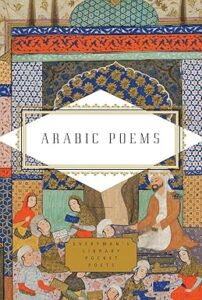


Arabic poetry has a wealthy and complicated historical past that spans many centuries, evolving by way of quite a lot of kinds throughout distinct eras and reflecting the cultural, inventive, literary, political, and social modifications in Arab societies. This e book show celebrates the richness of kinds and genres of Arabic poetry, a style that stays a central type of expression and resistance for Arab peoples.
For Arabs, poetry begins with pre-Islamic Bedouin oral traditions. This period, typically referred to as al-Jahiliyya, or the “Age of Ignorance” to demarcate it from the rise of Islam, produced among the strongest, lovely and revered Arabic literary expressions. It’s characterised by meters and cadences peculiar to lengthy standing pre-Islamic oral traditions. Its final kind is the lengthy qasida— rhyming odes which rejoice tribal values, desert landscapes, nomadic existence, loss and love, in addition to braveness, generosity, and heroic deeds. Many of those qasidas are nonetheless taught at colleges throughout the Arab world, and represent what has develop into referred to as the “register of the Arabs” (Diwan Al-Arab), some extent of social and emotional reference that has captured the sentiments, heartbreaks, longings, sacrifices, company and resilience of a really various individuals, all through centuries, and it nonetheless pins down and informs the way in which Arabic language is taught and spoken in its literary kind throughout the Arab world.
To take one instance, the poetry of Imrūʾ al-Qays (496-565) is thought to be the epitome of pre-Islamic Arabian verse. His poetry was so revered, that one among his qasidas grew to become referred to as one of many seven mu’allaqat, the suspended odes, which had been held on the Kaaba, in Mecca. Imrūʾ al-Qays’ qasida, entitled “Allow us to cease and weep” (قفا نبك qifā nabki) speaks of ruins, love, heartbreak and man’ s battle underneath a harsh and hostile surroundings. His poetry was so influential that it established a poetic style of “mourning the ruins”, which grew to become referred to as bukaa ala el atlal. The poet would bemoan the deserted nomadic tribes’ encampments, which they needed to periodically evacuate, in quest of extra hospitable websites. The Qifa Nabki qasida nonetheless stands as some of the lovely expressions of affection, longing, and people’ longing and attachment to the land, and is a part of the cultural schooling of all Arabs. The Moroccan poet Muhammad Bennis’ (b. 1948) traces his “lineage to the pre-Islamic poet Imru’ al-Qays.”, and identifies him as the al-‘Arabiyyah, the Arabic language. Bennis describes Imru Al Qays Buka ala al atlal as “ a canticle state, head to head with absence-death, as he halts to weep over a abandoned campsite, alone within the desert which I cherish inside my school room. From this canticle, I derive my filiations as an Arab.” (cited in Muhsin J. al-Musawi. Arabic Poetry: Trajectories of Modernity and Custom. Routledge, 2006)
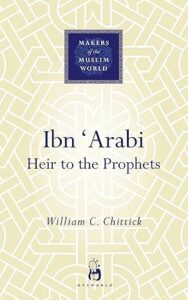
Islam introduced a seismic cultural shift, reworking poetic themes and kinds. The holy Quran’s unparalleled richness of language, its peculiar cadences and rhythms, deeply influenced Arab poets. Though secular themes continued to exist and flourish, the poetry throughout this era started to discover problems with morality and religion, and drew inspiration from the great thing about the Quranic language. Sufi poets like Mansur al-Hallaj (858-922) and Jalal al-Din Rumi (1207-1273) took this additional, mixing mystical experiences with verses to specific human longing and aspirations for divine love. Ibn Arabi’s (1165-1240) mystical poetry is alleged to have influenced Dante’s Divine Comedy, as did Abū al-ʻAlaʼ al-Maʻarri’s (973-1057) Risalat el ghufran. Menocal wrote:“Arabic poems of courtly love would affect the Provençal courtly traditions that may later have a major impression on the kinds of Dante (particularly Vita Nuova) and Petrarch (Canzoniere).”


Within the medieval Islamic Abbasid age (750-1258), poetry, influenced by the multicultural surroundings of the Abbasid court docket, grew to become much more refined and took on a cosmopolitan bent. Poets of the Abbasid period thrived within the courts throughout the Abbasid Caliphate. Figures like Abu Nuwas (756-c. 814) and al-Mutanabbi (915-965) infused their works with city sophistication, philosophical musings, and a eager consciousness of their socio-political environments. However most of all, they took the great thing about Arabic poetry to new heights. Al Mutanabbi earned the title of the “best Arab poet of all instances” for his means to specific human feelings and for the great thing about his language, and a statue of al-Mutanabbi nonetheless stands in Baghdad on a preferred avenue the place cafes and booksellers line up, a dwelling testimony to the continued love and reverence his poetry bears in each cultured Arab speaker’s coronary heart. Abu Nuwas’ poetry is legendary for his khamriyyat (wine poems). His Diwan, or collected poems/compendium, counts round 1,500 works that discover hedonism, sexuality, longing, love and faith. Whereas Abu Nuwas died in Baghdad round 814, his poetry remains to be recited throughout the Arab world right this moment, and stands as an exemplar of innovation, creativity, and humor.
Within the trendy interval, Arabic poetry needed to grapple with the challenges of modernization, colonization and the next quest for id, in addition to with loss, wars, dispossession and repressive political regimes. Free verse emerged, breaking away from the inflexible classical meters, permitting poets to specific themselves extra freely. Innovators like Mahmoud Darwish (1941–2008) , Adunis, (1930- ) ,Nizar Qabbani (1923-1998) revolutionized the shape, merging classical buildings with free verse, and tackling up to date problems with deep resonance for Arab societies—nationalism, political struggles, gender points, private freedom, neighborhood, social justice, modernist experimentation, loss, and the hunt for a dignified life.


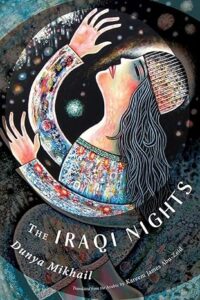
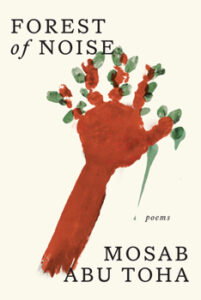
Within the historical past of contemporary Arabic poetry, poetry from and about Palestine holds a particular place, each as a option to deal with the continuing injustice and colonization of Palestine and the thwarted aspirations and hopes of Palestinians throughout geographic places, but additionally as an emblem for all Arabs’ quest for justice and a dignified life of their homelands, in opposition to colonialism, exploitation and erasure. Poetry round and from Palestine serves as a robust type of expression for a individuals whose id, historical past and struggles have been formed by displacement, occupation, and resistance. The centrality of the place Palestinian poetry occupies within the Arab world, and its import to the world as a robust expression of the flexibility of the medium to the touch individuals’s minds and hearts was on full show on November twenty fifth on the Nationwide E book awards ceremony, the place Fady Joudah’s new poetry e book [Ellipsis] was a finalist within the Poetry part, and the place Lena Tuffaha Khalaf’ s work, One thing About Residing gained the Nationwide e book award for poetry this yr. We additionally want to point out Mosab Abu Toha’s works, together with his debut e book of poetry, Issues You Might Discover Hidden in My Ear which gained the Palestine E book Award and an American E book Award. It was additionally a finalist for the Nationwide E book Critics Circle Award and the Walcott Poetry Prize. His new quantity of poetry entitled Forest of Noise is on show right here. Mosab Abu Toha is the founding father of the now destroyed Edward Mentioned library in Beit Lahia Metropolis in Gaza.
I dedicate this submit and the Arabic poetry e book show to the reminiscence of Hiba Abu Nada, Refaat Alareer and all of the poets who had been killed in Gaza: Refaat Alareer was a distinguished Palestinian author, poet and instructor from the Gaza Strip and one among dozens of poets, writers and intellectuals who had been killed by the Israeli strikes on Gaza. Alareer’s poem If I have to die is included within the poetry assortment Poems for Palestine . The gathering options Palestinian poets together with Hiba Abu Nada, Fady Joudah, Ghassan Zaqtan, Olivia Elias and others.


Peter Magierski
Center East & Islamic Research Librarian
pm2650@columbia.edu
Analysis Guides:
Librarian for Center East and Islamic Research is accountable for amassing print and digital publications from and in regards to the Center East. School and college students at Columbia have entry to one among North America’s largest analysis collections in Center East and Islamic Research—each within the vernacular languages of those areas, in addition to in English and Western European languages.
