


Lately, many travellers and long-time guests have lamented that Phuket has modified. The island, as soon as identified for its laid-back charming seaside cities, is now typically criticised for being overcrowded, with traffic-choked streets, rising growth, and unruly vacationers disrupting the as soon as tranquil ambiance. Widespread resort areas like Patong, Kata, and Karon are typically seen as having misplaced their genuine Thai character, formed now extra by mass tourism and speedy immigration than by custom.
And whereas there could also be some fact to those considerations, not all of Phuket has succumbed to the pressures of recent tourism. Tucked away from the chaos of the seaside resorts lies a spot the place the island’s wealthy historical past, vibrant tradition, and architectural magnificence are nonetheless proudly on show: Phuket Outdated City.
This historic district gives a refreshing distinction to the extra commercialised components of the island — a walkable enclave full of Sino-Portuguese appeal, vibrant heritage buildings, bustling markets, quaint cafés, and a robust sense of group. Whether or not you are keen about historical past or structure or just looking for a extra genuine slice of Phuket, the Outdated City stands as an enchanting city, fairly completely different to that discovered wherever else within the Kingdom.
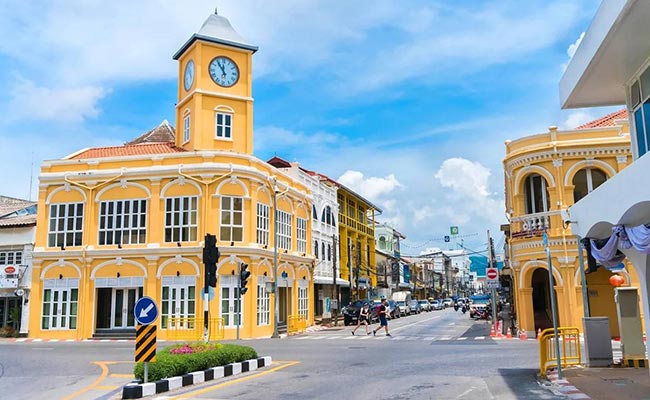
A Transient Historical past of Phuket Outdated City
Phuket Outdated City’s historical past is deeply rooted within the island’s significance as a serious tin-mining hub in the course of the Nineteenth and early twentieth centuries, a interval that introduced appreciable prosperity to the area. As international demand for tin surged, Phuket turned a vital node in worldwide commerce routes, attracting a wave of Chinese language immigrants, primarily Hokkien, who arrived to work within the booming tin mines. These laborers, merchants, and entrepreneurs would go on to kind a thriving group that significantly influenced the cultural and financial material of the island.
On the similar time, European merchants and buyers – significantly the Portuguese, British, and Dutch – have been drawn to the profitable tin commerce. They introduced with them architectural types, enterprise practices, and applied sciences that, when merged with Chinese language traditions and native Thai customs, gave start to the distinctive Sino-Portuguese id that defines Phuket Outdated City right now.
The wealth generated from tin mining led to the development of grand Sino-Portuguese mansions, ornately embellished shophouses, and key public infrastructure reminiscent of colleges, roads, and administrative buildings. Rich tin barons typically constructed lavish houses, like the long-lasting Baan Chinpracha, showcasing a fusion of European magnificence and Chinese language craftsmanship. The outcome was a townscape that blended Western neoclassical components — reminiscent of pilasters, cornices, and ornamental mouldings — with Chinese language courtyards, tiled roofs, and carved picket doorways.

Residence of Phra Aram Sakhonkhet, one of the vital well-known tin mining barons of the Nineteenth century. It’s now a Thai Airways workplace.
The city additionally turned dwelling to Chinese language guild halls, temples, and shrines, reflecting the social and non secular lifetime of the group.
Phuket Outdated City emerged not solely because the financial heart of the island but in addition as a multicultural melting pot. The legacy of that period continues to be seen right now within the city’s structure, delicacies, language, and festivals – providing guests a glimpse right into a wealthy and layered historical past that continues to form the id of Phuket.Architectural Highlights
Shophouses: Sensible Magnificence
The shophouses of Phuket Outdated City are amongst its most iconic constructions. Constructed primarily between the late Nineteenth and early twentieth centuries, these buildings are lengthy, slender, and infrequently related in rows — designed to maximise use of city house.
- The bottom ground sometimes serves as a storefront or workshop, whereas the higher flooring are reserved for residing quarters.
- Their arched home windows, air flow panels, and ornate stucco work usually are not simply ornamental however practical, offering airflow within the tropical local weather.
- Most facades are painted in comfortable pastels or daring jewel tones, contributing to the city’s colourful and photogenic appeal.
- Many of those shophouses have been lovingly restored and now host boutique cafes, artwork galleries, and craft retailers, serving to to protect Phuket’s cultural id.

The traditional Outdated City shophouses adorn the streets.
Mansions of Tin Wealth
In the course of the tin-mining period, rich Chinese language and Peranakan households constructed grand mansions to show their standing. These houses mix European luxurious — reminiscent of imported Italian ground tiles and Belgian chandeliers — with conventional Chinese language options like central courtyards and feng shui-influenced layouts.
A main instance is Baan Chinpracha, in-built 1903 by Phra Pitak Chinpracha, a outstanding native businessman. This mansion gives a uncommon glimpse into upper-class life in colonial-era Phuket, with a lot of its unique furnishings and structure preserved. It is open to the general public and serves as a cultural landmark, typically used as a movie set because of its authenticity.
One other gorgeous constructing is the Blue Elephant Mansion (also referred to as the Phra Pitak Chinpracha Home), now a restaurant however initially one of many grandest houses in Phuket, that includes intricate lattice work and lavish interiors.

The governor’s residence in-built 1903 by Phra Pitak Chinpracha (Tan Ma Sian), the Chinese language immigrant who made his fortune in tin mining. Now the Blue Elephant Cooking Faculty & Restaurant.
Temples and Religious Constructions
Phuket Outdated City additionally displays the non secular lifetime of its Chinese language settlers by quite a few vibrant temples and shrines.
Jui Tui Shrine is likely one of the most important, particularly in the course of the annual Phuket Vegetarian Competition, when the streets come alive with non secular processions and rituals. The shrine honors the Chinese language deity Tean Hu Huan Soy and is thought for its crimson facade, incense-filled halls, and dragon motifs.
Sang Tham Shrine, also referred to as the Shrine of the Serene Mild, is extra discreet, tucked away in an alley off Phang Nga Street. Lately restored, this Nineteenth-century temple gives a peaceable retreat with fantastically painted murals and Taoist iconography.
These non secular websites spotlight the non secular syncretism in Phuket, mixing Buddhism, Taoism, and native animist beliefs — all mirrored within the city’s numerous structure.
Cultural and Historic Points of interest in Phuket Outdated City
Phuket Outdated City is not simply admired for its structure, it is also a treasure trove of cultural and historic landmarks that inform the story of the island’s numerous heritage. From bustling markets and fantastically preserved lanes to insightful museums, these points of interest provide a deeper understanding of how Phuket advanced from a mining hub right into a vibrant multicultural group.
Thalang Street: The Heartbeat of Outdated City
Thalang Street is the cultural artery of Phuket Outdated City. This vibrant thoroughfare is lined with Sino-Portuguese shophouses, now dwelling to artisan boutiques, hip cafés, conventional tea homes, and avenue meals distributors. It strikes an ideal steadiness between old-world appeal and trendy aptitude.
Each Sunday night, the road transforms into the Lard Yai Strolling Road Market, a full of life gathering the place locals and vacationers come collectively. The market showcases Southern Thai avenue meals, handcrafted souvenirs, stay music, and cultural performances.
The festive ambiance is enhanced by colourful lights and native artwork shows, making it a must-visit expertise for anybody wanting to take in the city’s vitality and creativity.
Strolling down Thalang Street appears like stepping again in time — but with a contemporary, Instagram-worthy twist.

Phuket Thai Hua Museum: A Window into the Previous
Situated on Krabi Street, the Phuket Thai Hua Museum is housed in one of many city’s most elegant colonial buildings, initially a Chinese language college based in 1911. Right now, it serves as a museum and cultural centre, preserving the legacy of Phuket’s Chinese language-Thai group.
By way of a sequence of well-curated reveals, classic images, and multimedia shows, guests can be taught in regards to the early Chinese language immigrants who settled on the island, their function within the tin mining business, and their cultural integration.
The museum additionally covers the Baba Nyonya (Peranakan) heritage, which has performed a serious function in shaping Phuket’s social and cultural material. This museum is a unbelievable cease for anybody interested by Phuket’s multicultural roots and its transformation into a serious commerce and tourism centre.
Soi Rommanee: From Vice to Classic
Tucked simply off Thalang Street, Soi Rommanee is likely one of the most charming and photogenic streets within the Outdated City — nevertheless it wasn’t at all times so idyllic. Traditionally, Soi Rommanee was Phuket’s red-light district, frequented by Chinese language miners and sailors looking for leisure.
Right now, the lane has been fantastically restored, with its shophouses painted in vibrant pastels and remodeled into quaint guesthouses, gelato retailers, and galleries.
Whereas the nightlife has lengthy light, the romantic ambiance stays, making it a preferred vacation spot for {couples}, photographers, and historical past buffs.
The identify Rommanee, which loosely interprets to “nice or joyful,” displays the road’s transformation from a spot of vice to a peaceable cultural gem.

Ideas for Visiting Phuket Outdated City
- Finest Time to Go to: Early morning or late afternoon is right to keep away from the warmth.
- Put on Comfy Sneakers: One of the simplest ways to discover the Outdated City is on foot, so be ready for lots of strolling.
- Plan for the Market: If doable, go to on a Sunday night to expertise the full of life Strolling Road Market.
- Keep Close by: Think about staying in a boutique lodge within the Outdated City to provide your self a full day.
- Deliver a Digital camera: The colorful buildings, avenue artwork, and classic shophouses make Phuket Outdated City a dream for images lovers.
- Respect Native Customs: When visiting temples or shrines within the space, costume modestly and take away footwear when required.
- Strive the Native Delicacies: Do not miss out on native Peranakan dishes and Phuket specialties — many small eateries and meals stalls serve genuine flavours distinctive to the area.
- Look ahead to Road Artwork: Hold an eye fixed out for the spectacular murals and graffiti artwork hidden in alleyways — they inform tales of the city’s cultural heritage and trendy id.
- Money is King: Whereas many locations settle for playing cards, smaller distributors, market stalls, and avenue meals sellers could solely take money. ATMs can be found, nevertheless it’s good to hold some baht.
- Thoughts the Warmth: Carry a bottle of water, put on sunscreen, and contemplate a hat or umbrella — particularly for those who’re exploring mid-day.
Final Up to date on
