


Why Ought to Newcomers Use Vancouver Public Transit?
Vancouver public transit can really feel complicated at first—particularly with fare zones, transfers, and a number of transit programs. This information offers a transparent overview of how newcomers can journey confidently utilizing public transportation. Utilizing public transit saves time, reduces prices, and makes exploring town and the encircling suburbs simpler. TransLink manages Vancouver public transit throughout Metro Vancouver, together with Vancouver, Surrey, Burnaby, Richmond, and North Vancouver.
Advantages of Public Transit
- Lower your expenses on commuting and scale back reliance on a automobile in one in all Canada’s most costly cities.
- Journey rapidly and conveniently to work, faculty, buying, and leisure.
- Keep away from visitors congestion and parking prices with eco-friendly transportation.
In 2024, TransLink recorded 240.9 million journeys, exhibiting robust reliance on public transit throughout the area.
What are the Predominant Transit Choices in Metro Vancouver?
Metro Vancouver has 4 foremost transit programs:
- 1. SkyTrain – Fast, automated trains on elevated and underground tracks
- 2. Buses – Frequent service connecting each neighbourhood
- 3. SeaBus – Ferry connecting Vancouver to North Vancouver
- 4. West Coast Categorical – Weekday commuter prepare connecting Downtown Vancouver with the Fraser Valley (ending in Mission Metropolis).
Most newcomers primarily use SkyTrain, buses, and SeaBus. TransLink additionally operates HandyDART, a devoted service for folks with disabilities.
Over 80% of downtown commuters depend on the SkyTrain or RapidBus throughout peak hours.
For a full image of life within the metropolis, see Is Vancouver, Canada a Good Place to Reside for Newcomers?
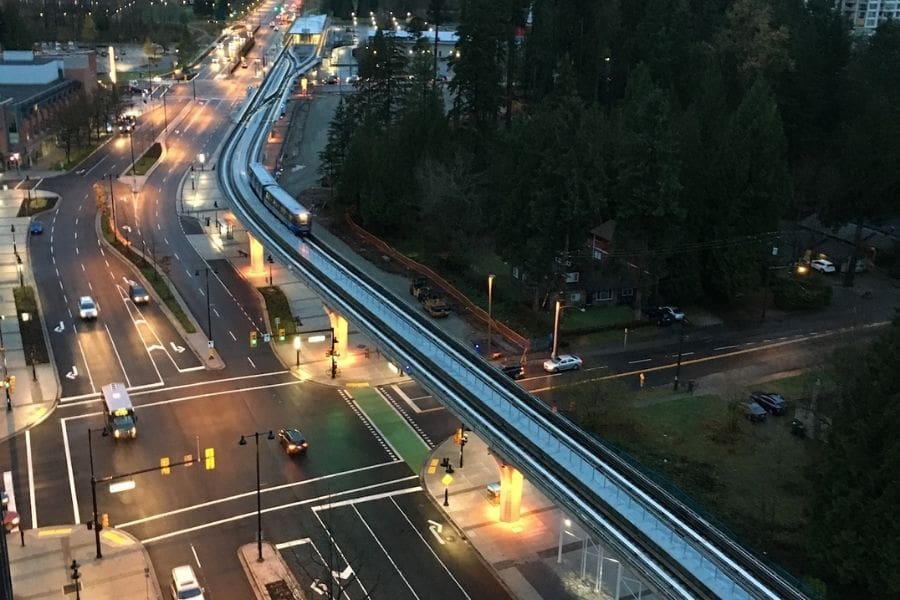
How Can Newcomers Use the SkyTrain in Vancouver?
For a lot of newcomers, the SkyTrain is the best place to start out. It’s easy, quick, and connects main settlement areas like Surrey, Burnaby, and Downtown Vancouver. Learn extra about Dwelling in Surrey, BC.
- Automated trains on elevated and underground tracks make commuting quick and dependable.
- Common pace: 35 km/h
- Strains: Expo, Millennium, and Canada Strains join downtown, suburbs, and key hubs.
💡Tip: Dwelling inside 500 m of a SkyTrain station considerably reduces commute instances.
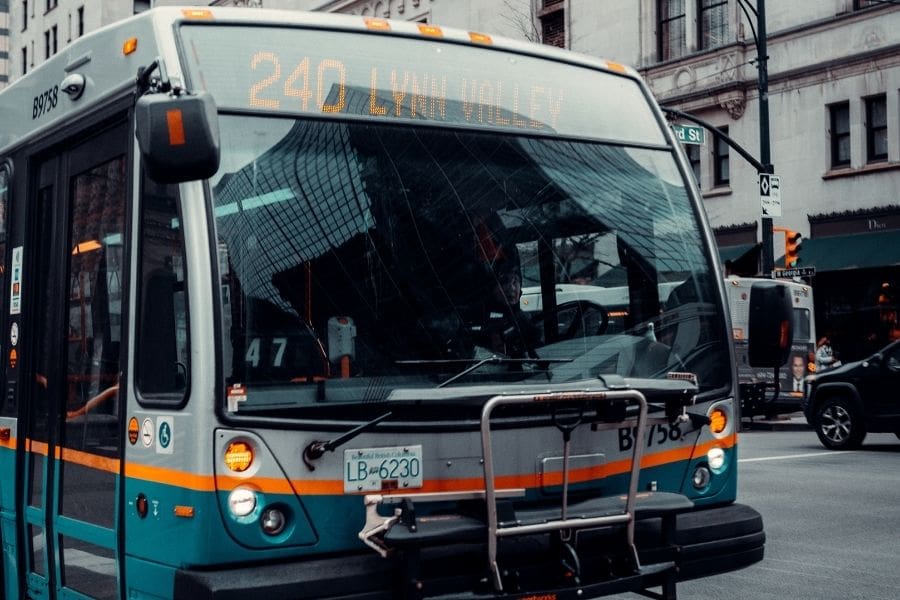
How Do Buses Assist Newcomers Attain Each Neighbourhood?
Buses cowl areas past SkyTrain attain and work in tandem with the SkyTrain to supply versatile routes.
- Working hours: 5:00 AM to 1:00 AM
- Transfers: Longer journeys could require a number of transfers. Use Google Maps or the Transit app to plan effectively.
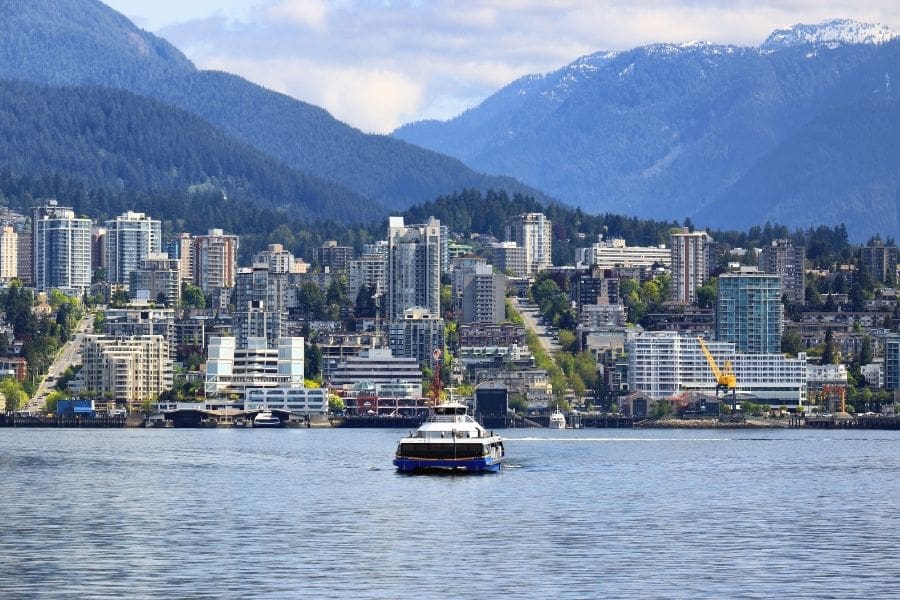
How Can Newcomers Use the SeaBus to Cross Burrard Inlet?
SeaBus connects Downtown Vancouver to North Vancouver, making waterfront commutes easy.
- Frequency: Each quarter-hour in the course of the day, half-hour within the evenings and on Sundays
- Working Hours: 6:00 AM – 1:00 AM (Mon–Sat) and 8:00 AM – 11:00 PM (Solar/Holidays).
💡 Tip: Nice for newcomers residing in North Vancouver or commuting to downtown jobs.
How Does the West Coast Categorical Serve Metro Vancouver Commuters?
West Coast Categorical serves commuters travelling lengthy distances from the Fraser Valley, providing a cushty different to driving.
- Distance: 69 km with 8 stops.
- Journey time: ~1 hour quarter-hour.
- Zone-based fare: 5 zones whole; one-way $8.60–$14.25 (grownup), $5.05–$8.85 concession. Seek advice from West Coast Categorical Fares to estimate your fare.
How A lot Does Vancouver Public Transit Price in 2025?
There are three fare zones throughout Metro Vancouver. The variety of zone boundaries you cross throughout your journey, in addition to the time and day, decide your fare.
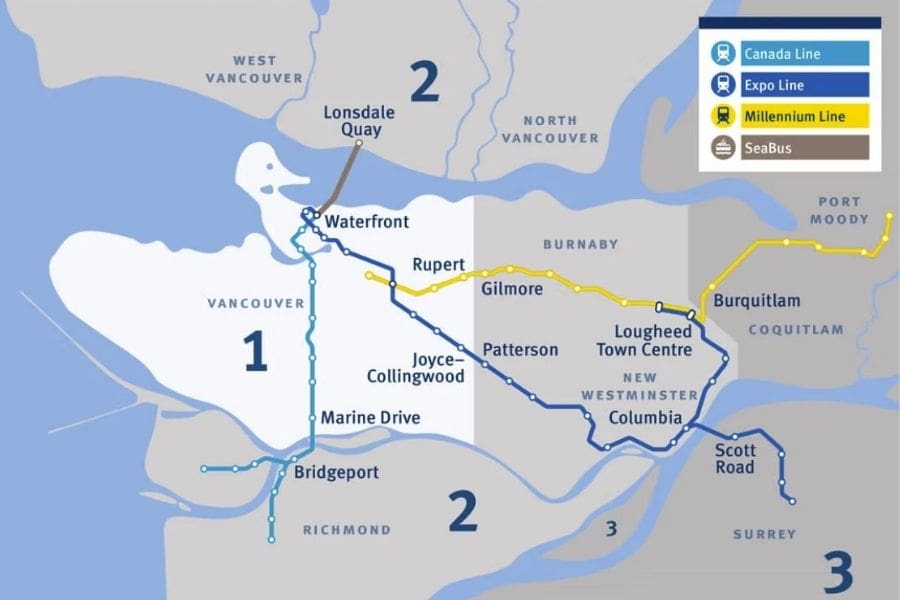
Vancouver Public Transit Fare Zones (SkyTrain, SeaBus, Bus Fare)
| ZONE | ADULT CASH FARES | CONCESSION FARE (YOUTH/ 65+) |
|---|---|---|
| 1 | $3.35 | $2.25 |
| 2 | $4.85 | $3.30 |
| 3 | $6.60 | $4.05 |
- Bus fares and HandyDART: 1-Zone fare always
- Off-peak journey: Weekends and weekdays after 6:30 PM are 1-zone fare
- Single fare: legitimate for 90 minutes on the bus, SkyTrain, and HandyDART.
- Provincial statutory holidays: 1-Zone fare.
How Can Newcomers Save on Transit with a Compass Card?
The Compass Card makes fares extra inexpensive.
How Compass Card Works
- Fee: Faucet on buses, SkyTrain, SeaBus, and West Coast Categorical
- Financial savings: Compass fares are usually 15%–20% cheaper than paying money
- Choices: Saved worth, day passes, month-to-month passes (expire at month-end)
- The place to purchase: On-line, Compass retailers, or Compass Merchandising Machines (CVM)
- Refundable payment: $6 per card.
Saved Worth Defined
Saved worth is the cash you add to your Compass card. You need to use this cash to pay for fares everytime you use the Vancouver public transit system.
Fares are present as of 2025. Verify right here for present Translink pricing and fare zones, and to estimate your fare.
💡Tip: Utilizing a Compass card can save newcomers as much as 20% per journey.
Many newcomers select neighbourhoods based mostly on each lease and transit entry. Our publish Finest Areas to Reside in Vancouver, Canada: A Information for Newcomers highlights the areas that stability affordability, comfort, and simple public transit connections.
Vancouver Transit Initiatives
- Surrey–Langley SkyTrain Extension (completion ~2027): Higher entry to South Fraser suburbs.
- New RapidBus routes and frequency upgrades: Elevated service reliability.
- Federal and provincial funding: ensures long-term funding in transit infrastructure.
Ideas for Newcomers Utilizing Vancouver Public Transit
- Plan your route with Google Maps or the TransLink app
- Verify peak-hour overcrowding, particularly buses and the SkyTrain
- Purchase a Compass card to economize and observe journeys
- Issue transit prices into your month-to-month finances ($106/month grownup go).
- Select a neighbourhood close to the SkyTrain or RapidBus for simpler commutes.
FAQs About Vancouver Public Transit
Sure, it’s in depth and frequent. Peak-hour buses could also be crowded, however the SkyTrain and RapidBus present quick and dependable journey.
Sure, most newcomers rely solely on the SkyTrain, buses, and SeaBus.
Sure. Youth (5–18) and seniors (65+) pay concession fares by way of Compass card.
East Vancouver, Mount Nice, Kitsilano, North Vancouver, and soon-to-improve suburbs like Surrey and Langley.
Approx. $106/month for an grownup; cheaper for youth/senior concessions.
Remaining Ideas
For newcomers, understanding Vancouver public transit is a crucial first step in settling into town. The SkyTrain, bus community, and SeaBus make it attainable to stay and work in Vancouver with out a automobile, whereas Compass Playing cards and clear fare zones make it easier to handle prices.
If you’re settling in Vancouver quickly, dependable transit entry could make your first months simpler. Discover rental choices in transit-friendly neighbourhoods utilizing the Leases for Newcomers device.
Renting your first dwelling in Canada | Choices & options for newcomers
Trying to find your first dwelling in Canada? Be part of this unique session for key insights on housing market circumstances, inexpensive choices, and renting with out credit score historical past. Tailor-made for newcomers settling within the subsequent six months, register now for invaluable suggestions and a free information!
REGISTER FOR THE WEBINAR
WRITTEN BY

Corinna Frattini
Senior Editor and Content material Director, Put together for Canada
Corinna researches and writes content material to assist newcomers make knowledgeable selections about housing, employment, banking, and facets of settling in Canada. With a background in human assets and management growth, her articles concentrate on how newcomers can proceed their careers in Canada. Her writing combines analysis, sensible steering, and clear language to assist newcomers on their journey.
© Put together for Canada 2025
