


The place an applicant submits an entire software, however an immigration officer nonetheless has considerations concerning the deserves of it, the immigration officer will usually present a equity letter to the applicant. This requirement has arisen from Federal Courtroom of Canada jurisprudence which offers that the responsibility of procedural equity can require that an applicant be given a chance to reply to a call maker’s considerations when these considerations transcend merely whether or not the laws or associated necessities are met on the face of the appliance. When, for instance, the applicant could also be unaware of the existence or the premise of the priority, procedural equity might require prior discover of the priority earlier than a call is made in order that the applicant has a chance to attempt to disabuse the officer of the priority. Because the Courtroom famous in Kaur v. Canada (Citizenship and Immigration), 2020 FC 809, that is the case for each momentary and everlasting residency purposes.
In Asanova v. Canada (Citizenship and Immigration), 2020 FC 1173, the Courtroom said:
Even so, at a minimal procedural equity requires that an applicant for a visa have a chance to take part meaningfully within the software course of. Consequently, the responsibility of procedural equity can require that an applicant be given a chance to reply to a call maker’s considerations earlier than a call is made when these considerations transcend merely whether or not the legislative or associated necessities are met on the face of the appliance (Hassani v Canada (Minister of Citizenship and Immigration), 2006 FC 1283 at para 24). When, for instance, an applicant for a visa could also be unaware of the existence or the premise of the priority, procedural equity can require prior discover of the priority earlier than a call is made in order that the applicant has a chance to attempt to disabuse the officer of the priority. See Talpur v Canada (Citizenship and Immigration), 2012 FC 25 at para 21; Mohammed v Canada (Immigration, Refugees and Citizenship), 2019 FC 326 at paras 25-26; and Bui v Canada (Citizenship and Immigration), 2019 FC 440 at para 27.
Additional, when the priority pertains to misrepresentation, the significance of getting a significant alternative to satisfy it’s apparent given the potential penalties of a discovering of misrepresentation: see Toki v Canada (Immigration, Refugees and Citizenship), 2017 FC 606 at para 17, and Ntaisi v Canada (Citizenship and Immigration), 2018 CanLII 73079 (FC) at para 10. If a discovering of misrepresentation is made, an applicant is not going to solely be denied the visa for which they utilized; they can even be inadmissible to Canada for the subsequent 5 years. With out query, this is a crucial consequence (cf. Baker at para 25). Consequently, a priority about misrepresentation triggers the next stage or diploma of procedural equity in comparison with that which is engaged in visa purposes the place this concern is absent: see Likhi v Canada (Citizenship and Immigration), 2020 FC 171 at para 27.
Typically on judicial evaluation the problem is whether or not a procedural equity letter ought to have been despatched when one was not. Within the current case, nevertheless, a procedural equity letter was despatched to the applicant. The query right here, then, is whether or not that letter really happy the necessities of procedural equity. A practical method must be taken in answering this query.
The aim of a procedural equity letter “is to supply sufficient data to an applicant {that a} significant reply could be equipped” (Ntaisi at para 6). Thus, in assessing whether or not the necessities of procedural equity had been met, the governing query is: Did the letter inform the affected celebration of the choice maker’s considerations? Provided that it did can it’s stated that the letter gave the affected celebration a significant alternative to deal with the considerations. What this implies is that if the choice maker had particular considerations about features of an software, the procedural equity letter should state greater than common considerations. It should state the choice maker’s considerations with enough readability and particularity in order that the affected celebration has a significant alternative to deal with them. See AB v Canada (Citizenship and Immigration), 2013 FC 134 at paras 53-54; Punia v Canada (Citizenship and Immigration), 2017 FC 184 at para 62; Toki at para 25; and my determination in Kaur v Canada (Citizenship and Immigration), 2020 FC 809 at para 39.
The failure to adequately reply to a procedural equity letter is usually the refusal of the appliance.
Sadly, many people don’t take the time to correctly reply to the procedural equity letter. Upon evaluation, it’s usually obvious that the explanation for the insufficient response is both as a result of the applicant didn’t perceive the equity letter, or as a result of they merely didn’t know easy methods to reply appropriately. As effectively, the fault might lie with the visa officer if the procedural equity letter was inadequate.
Accordingly, there are a number of issues that candidates ought to learn about responding to procedural equity letters.
The very first thing is probably the obvious, and that’s that candidates ought to handle the problems which can be raised within the equity letter. If a equity letter asks an applicant to supply detailed data as to what they had been doing from 1996-1997, then they need to present detailed data. Nonetheless, it’s usually pointless to anticipate future points or questions that might come up however that aren’t instantly foreseeable, as Immigration, Refugees and Citizenship Canada will normally ship one other letter if it has considerations.
Vasilyeva v. Canada (Citizenship and Immigration), 2017 FC 551 is an instance of the place this didn’t happen, and the place the Federal Courtroom decided that the visa officer breached procedural equity. Justice Barnes wrote:
The Applicant was searching for everlasting residency in Canada. Her partner’s Russian navy service was clearly related to the appliance and the visa officer requested his service guide by e mail dated August 24, 2015. The Applicant offered a replica of her husband’s service guide issued in 1992, which was obtained on September 22, 2015. The relationship of this file raised a contemporary concern as could be seen from the visa officer’s file notes dated Could 12, 2016:
Partner: profession within the Soviet navy as an officer. Partner submitted translated copy of navy guide: partner served apparently 10 years, 1982-1992, attending navy school for five years after which serving as a senior lieutenant in Saint Petersburg: partner seems to have had no promotions regardless of formal navy schooling and prolonged service. Partner’s navy booklet was issued in 1992, on the finish of his service: that is extremely uncommon as his Soviet navy booklet ought to have been issued when he was 18 years previous (circa 1981), when he would have been referred to as to register for necessary navy service; he ought to positively have been issued a navy booklet initially of his navy profession service in 1982. NB that the 1992copy of the navy booklet submitted doesn’t point out that it’s a substitute or a replica. Authentic Army Booklet from 1981/1982, Detailed Army Historical past desk and Safety Screening Required
Due to the above concern, the visa officer requested, inside 60 days, the “authentic navy guide (confirming your service within the military from 1982 to 1992) and accomplished, hooked up type concerning your service within the military together with all particulars”. Just a few days later, a extra detailed request was despatched within the following type:
It is a follow-up message to our e mail dated 12 Could 2016.
Please word {that a} copy of Vladimir Serdyuk’s navy guide is already on file; nevertheless, this navy guide was issued in 1992, on the finish of Vladimir Serdyuk’s navy profession. Along with the documentation requested in our 12 Could 2016 e mail, please submit an authorized translated copy of Vladimir Serdyuk’s navy guide that was issued to him in both 1981-1982, when he turned 18 and commenced his navy service. If Vladimir Serdyuk doesn’t have a navy guide issued in 1981-1982, please present an in depth rationalization as to why he doesn’t have a navy guide relationship from the start of his navy service.
Please adjust to our request inside 60 days, in any other case your software for everlasting residence in Canada might be assessed primarily based on the documentation on file and could also be refused.
Ms. Vasilyeva was unable to supply the 1981-1982 navy guide, and as an alternative re-submitted the 1992 navy guide, together with a an evidence (which apparently was not obtained by the visa officer).
Because the Federal Courtroom determination then notes:
What occurred subsequent is the crux of the matter at hand. As a substitute of merely rejecting the appliance for failing to excellent the file, the visa officer recognized a wholly new downside. He expressed a priority in regards to the authenticity of the service guide that had been submitted. This concern is mirrored within the following passage from the visa officer’s file notes:
On 02 June 2016, applicant submitted an evidence letter, the unique navy guide issued in 1992, and aDetails of Army Service desk. I word that the navy guide appears to be like model new (no wrinkles, folds or put on & tear) though it was issued 24 years in the past. I additionally word that the corners of the navy guide submitted usually are not die-cut (as one would anticipate with a government-issued booklet) however fairly seem to have been round-cut with scissors. These two components name into query its authenticity.
With out informing the Applicant of the above credibility concern, the visa officer proceeded to refuse the appliance. This determination prompted a request for reconsideration which was additionally rejected.
As Justice Barnes discovered, this new credibility concern that arose on account of Ms. Vasilyeva’s response to the procedural equity letter constituted a wholly new subject that necessitated a brand new procedural equity letter.
As effectively, an applicant can usually assume that they solely want to reply to the considerations raised within the equity letter. The Federal Courtroom has repeatedly decided that it’s a breach of procedural equity for officers to have interaction in a “bait-and-switch.” In Jin v. Canada (Citizenship and Immigration), 2014 FC 612 for instance, Justice Roy held that:
[Immigration, Refugees and Citizenship Canada] raised a really particular concern within the equity letter: will the applicant reside within the Province of Quebec. That’s the matter that’s addressed squarely within the response. There isn’t any additional dialogue of the credibility or authenticity of that data. Quite, a very totally different subject, the return to Canada altogether, turns into the explanation for the refusal. Black’s Regulation Dictionary (West Group, seventh ed) defines “bait and swap” as “A gross sales apply whereby a service provider advertises a low-priced product to lure prospects into the shop solely to induce them to purchase a higher-priced product.” Though most analogies are considerably faulty, this one illustrates the purpose in that the applicant is lured into pondering that the problem is one factor, to be informed that it’s one thing else of an excellent increased order.
As Justice Diner famous in Akhtar v. Canada (Citizenship and Immigration), 2019 FC 123, that is primarily based on the latin precept expressio unius est exclusio alterius, which implies “when a number of issues of a category are expressly talked about others of the identical class are excluded.” In that case, Justice Diner dominated that it was a breach of procedural equity for an officer to ask an applicant to deal with eight particular factors about his software solely to then refuse the appliance on an unraised ninth level.
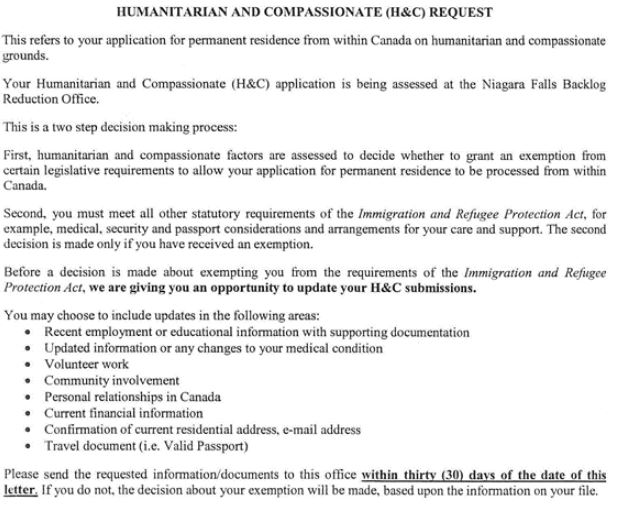 If an applicant is unable to incorporate all the data that they require in a response to a equity letter, however they want to submit lacking data a brief interval later, then applicant ought to guarantee that their first response signifies that there’s extra data coming. For instance, if IRCC requests 5 paperwork, and the applicant solely present three, you will need to point out that the opposite two paperwork might be offered shortly, and by when.
Ample Readability
Lastly, in Singh v. Canada (Citizenship and Immigration), 2023 FC 904, Madam Justice Go dominated that it was a breach of procedural equity for an officer to say that they’d verified that an Indian Tax Return was false with out explaining why. This precept was affirmed in Bhatia v. Canada (Citizenship and Immigration), 2024 FC 698, the place the procedural equity letter said that an Indian Tax Return was verified and confirmed to be fraudulent.
In Nanikova v. Canada (Citizenship and Immigration), 2025 FC 1094, Justice Grant dominated that an officer should make clear in a procedural equity letter if their concern a couple of doc pertains to it being altered or if the underlying content material is pretend.
Employer Response to PFL
In Khayati v. Canada (Citizenship and Immigration), 2024 FC 1402, Justice Pamel discovered it unreasonable (and even described it as chutzpah) for a visa officer to say that a person was contacted throughout a cellphone name, when the person later acts in writing as if the decision by no means occurred, with out addressing the inconsistency.
